Vision & imagingAI & machine learning11 stars on GitHub
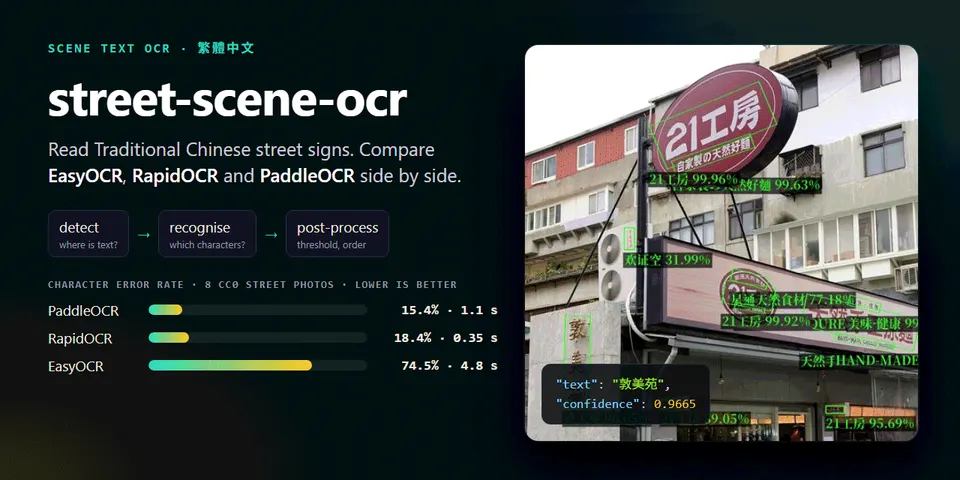
Street Scene OCR
Compare EasyOCR, RapidOCR and PaddleOCR on Traditional Chinese street signs, with text boxes, timings and a small public-domain benchmark.
2026Completed
Computer Vision
Work · InfortrendAudience Analytics for Digital Signage
A camera next to a digital sign tracks the people in front of it, guesses gender and age group, notices who is actually looking, and picks the ad that fits them. Most people, it turns out, walk past.
Built at Infortrend. The code belongs to the company, so there is no source link, and the figures come from internal experiments at the time. Read the chapter on the Work page
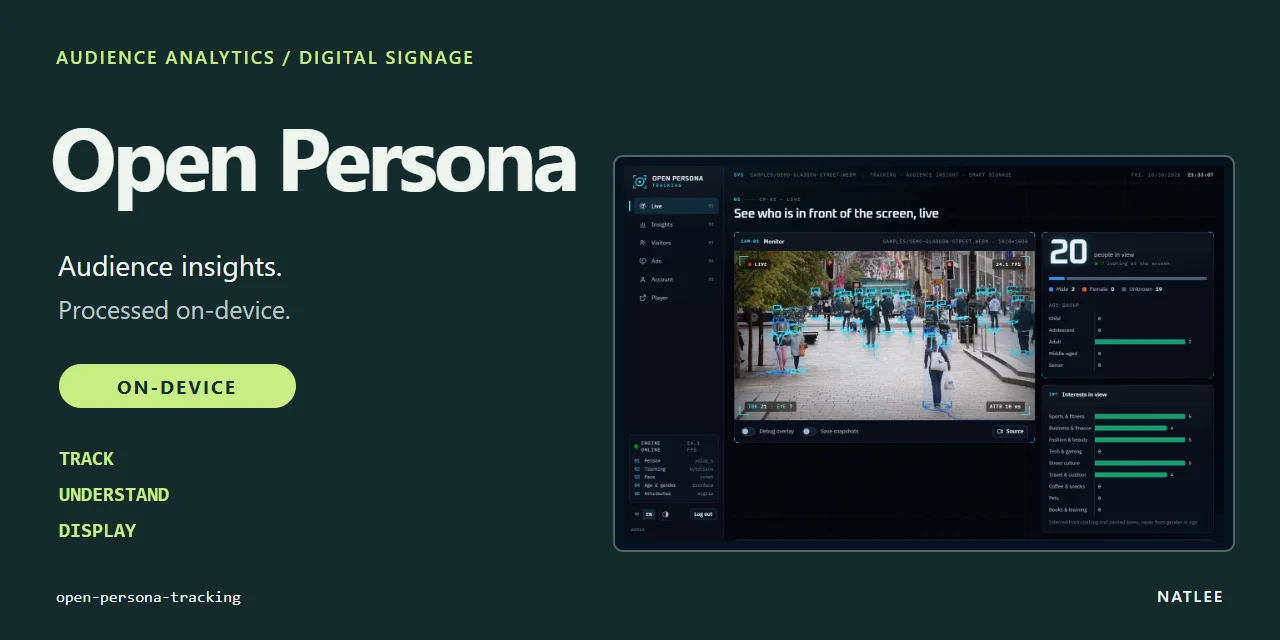
Built at Infortrend for an embedded digital-signage system. A camera beside the screen detects faces, follows each person from frame to frame with a track ID, estimates gender and age group, and checks whether the face is turned toward the screen. Each person's estimates are averaged over frames, so guesses made on small, distant faces improve as people walk closer. The results go into a daily SQLite database and a small HTTP API, and a web service scored every ad against the audience in front of the screen and played the best match. It ran on Nvidia Jetson edge devices next to the screens. The cover shows Open Persona, a later personal rewrite that tracks whole bodies and infers interests; it is not public.
Built at Infortrend for an embedded digital-signage system, so a screen could choose its ad from the people actually standing in front of it. Faces far away are small and blurry, so the system keeps refining its guess as people walk closer. Patience, implemented as an average.
Lets a digital sign choose its ad for the people actually in front of it, and leaves daily records of who passed and who looked. It all runs on a Jetson beside the screen and keeps compact records instead of video, so nobody has to sit through the footage.
Simplified on purpose. The real thing has more arrows and at least one config file nobody understands.
Compare EasyOCR, RapidOCR and PaddleOCR on Traditional Chinese street signs, with text boxes, timings and a small public-domain benchmark.
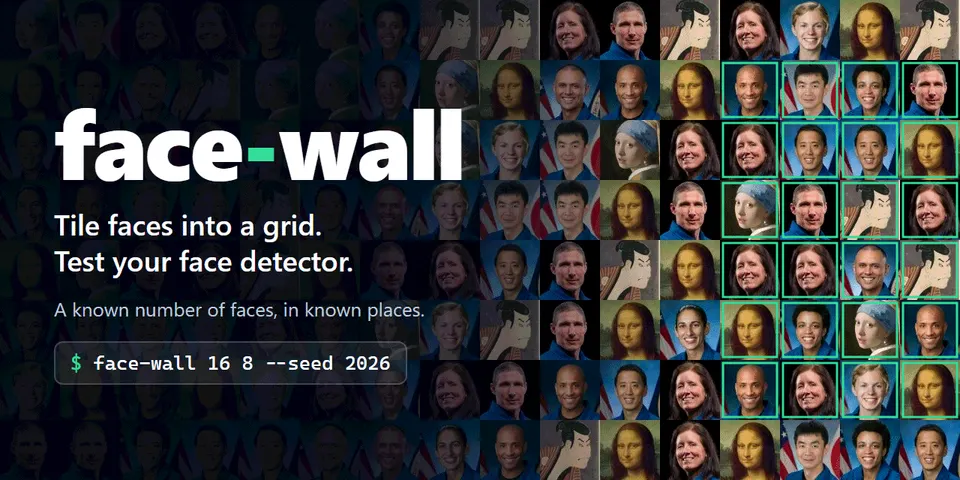
Tile a folder of face pictures into a seeded grid. Optionally crop faces with OpenCV’s YuNet detector before building the wall.
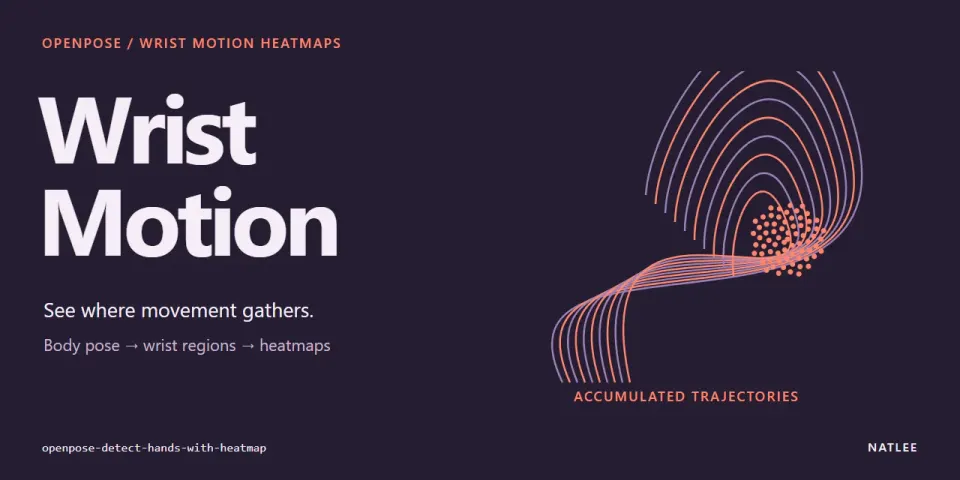
Runs the body OpenPose model over a video and piles up where the wrists went into a heatmap. The repo name says hands; the model only ever knew about wrists.