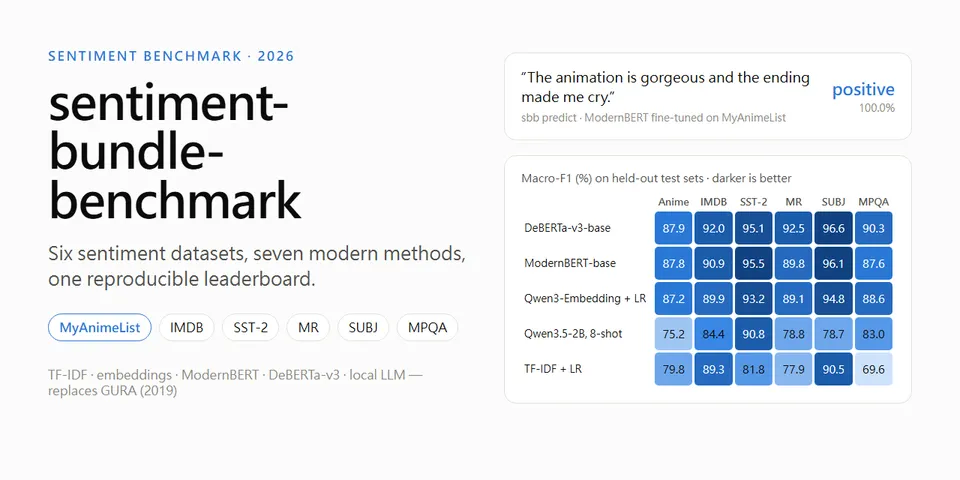
Led the sentiment engine behind a company's social-listening products, reading more than three billion crawled posts. Most of them were complaints.
Built at Big Data. The code belongs to the company, so there is no source link, and the figures come from internal experiments at the time. Read the chapter on the Work page
As the lead engineer for the sentiment analysis AI engine, I developed and maintained the core emotion detection model that processes data from web crawlers. The system analyzes sentiment from crawled content and outputs emotion classification results, which are then integrated with the company's flagship products—Keypo (大數據引擎) and DailyView (網路溫度計)—to provide users with comprehensive online sentiment and buzz analysis. The platform successfully processed over 3 billion data points with a 30% accuracy improvement, enabling real-time sentiment monitoring and trend analysis for business intelligence.
What it's good for
Gives Keypo and DailyView users sentiment and buzz trends in real time over more than three billion crawled posts. The 30% accuracy gain means fewer angry posts quietly counted as happy ones.
How it fits together
Simplified on purpose. The real thing has more arrows and at least one config file nobody understands.
Three billion posts. Mostly complaints.
Web crawlers
Daily crawl
→ stored in
Crawled post store
Elasticsearch
→ read by
This oneSentiment engine
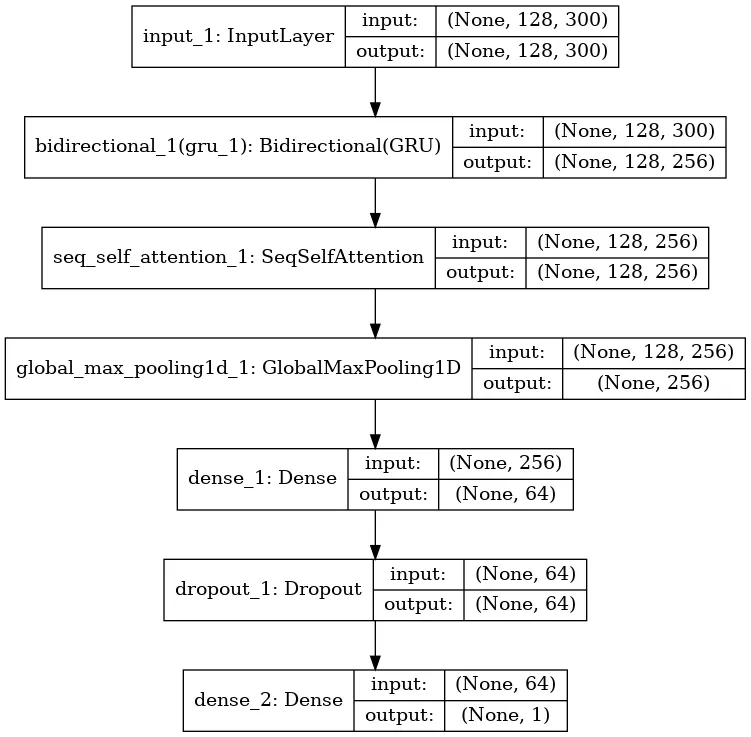
PaddlePaddle emotion model
Docker services
Kubernetes scaling
→ labels feed
Social-listening products
Keypo
DailyView
Point at a box to see what it connects to.
Features
Core sentiment analysis AI engine development
Web crawler data processing pipeline
Emotion classification and sentiment output
Integration with Keypo and DailyView platforms
Online sentiment and buzz analysis for users
Real-time sentiment monitoring
Scalable microservices architecture
The problem
Processing 3+ billion data points
Real-time analysis requirements
Model accuracy optimization
System scalability
What I did
Developed and maintained the core sentiment analysis AI engine
Built data processing pipeline from web crawlers to emotion classification
Integrated sentiment analysis results with Keypo and DailyView products
Implemented distributed processing with Kubernetes for scalability
Optimized models using PaddlePaddle framework for 30% accuracy improvement
Built efficient data pipeline with Elasticsearch for real-time analysis
Results
Successfully deployed core sentiment analysis AI engine for company products
Processed over 3 billion data points from web crawlers
Achieved 30% improvement in emotion classification accuracy
Integrated sentiment analysis with Keypo and DailyView platforms
Enabled real-time online sentiment and buzz analysis for end users
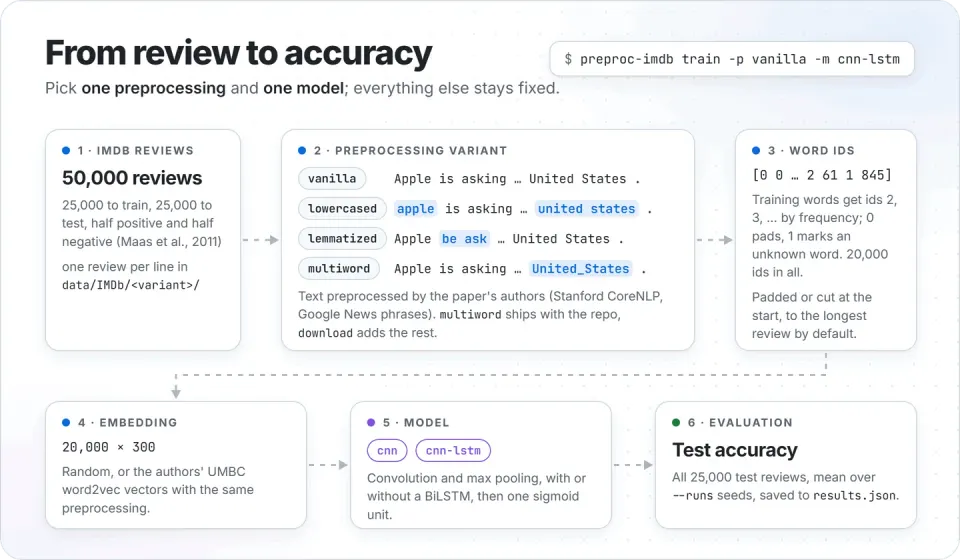
An unofficial, reproducible re-run of a BlackboxNLP 2018 paper's IMDb experiments: four ways to preprocess the text, two neural models, every run traceable. It started as research for my master's thesis in 2019. That version had three bugs; this one fixes them and says where they were.