One Docker dev box per user, with a web terminal, a noVNC desktop and optional GPU. The Django version, rewritten in Rust, partly to find out whether I could.
A high-performance development environment management system built with Rust and Docker. This platform provides isolated, containerized development environments for multiple users on the same machine, featuring a Rust-based backend API with JWT authentication, WebSocket support for real-time console access, and a React/Next.js frontend. All services run behind Traefik reverse proxy with optional Nvidia Docker support.
What it's good for
The pick for new setups: the same dashboard, routes and permissions as the Django version, so users can't tell which one they got, while the backend image shrinks from 687 MB to 144 MB and there's one binary to babysit instead of Daphne plus an RQ worker.
Diagrams
Main paths only. The edge cases stayed in the code.
The Django version idled at 175 MiB. This one idles at 5.5. I measured twice.
Point at a box to see what it connects to.
Log in, keep a JWT pairaccess token lasts an hour
Fill in the create dialogname, SSH port, passwords
Name valid and port free?privileged: admins only
Push a job onto Redis
Return a task_id at once
Worker pops the joba task inside the API process
Create and start gui-vncowner label, Traefik route
Did Docker say yes?
Error goes to the logno notification is sent
CREATED reaches owner and adminsover the notifications WebSocket
The list refreshes
How do you get in?
Shell over a WebSocketdocker exec bash, or attach
NoVNC through Traefikasks for the VNC password
ssh -p your portskips Traefik entirely
Your own Linux desktopothers' desktops answer 404
Log in, keep a JWT pair(access token lasts an hour) → Fill in the create dialog
Fill in the create dialog(name, SSH port, passwords) → Name valid and port free?
Name valid and port free?(privileged: admins only) → no, fix it: Fill in the create dialog → yes: Push a job onto Redis
Push a job onto Redis → answer now: Return a task_id at once → in background: Worker pops the job
Return a task_id at once → wait for news: The list refreshes
Worker pops the job(a task inside the API process) → Create and start gui-vnc
Create and start gui-vnc(owner label, Traefik route) → Did Docker say yes?
Did Docker say yes? → yes: CREATED reaches owner and admins → no: Error goes to the log
Error goes to the log(no notification is sent)
CREATED reaches owner and admins(over the notifications WebSocket) → The list refreshes
The list refreshes → How do you get in?
How do you get in? → web terminal: Shell over a WebSocket → desktop: NoVNC through Traefik → SSH: ssh -p your port
Shell over a WebSocket(docker exec bash, or attach) → Your own Linux desktop
NoVNC through Traefik(asks for the VNC password) → Your own Linux desktop
ssh -p your port(skips Traefik entirely) → Your own Linux desktop
Your own Linux desktop(others' desktops answer 404)
Features
High-performance Rust backend API
JWT-based authentication system
WebSocket console access
Multi-user environment isolation
Traefik reverse proxy integration
React/Next.js dashboard
Optional Nvidia Docker support
Redis task queue
Automated environment provisioning
The problem
Building high-performance Rust API
WebSocket implementation for console access
Docker API integration with Bollard
JWT authentication and authorization
Traefik configuration for multi-instance NoVNC
What I did
Implemented Rust backend with async/await
Built WebSocket handlers for real-time console
Used Bollard for Docker API integration
Created JWT-based auth system with SQLite + Argon2
Configured Traefik for service routing
Results
Improved performance over Python version
Lower memory footprint with Rust
Enhanced security with type-safe code
Better concurrency handling
Simplified deployment with Docker Compose
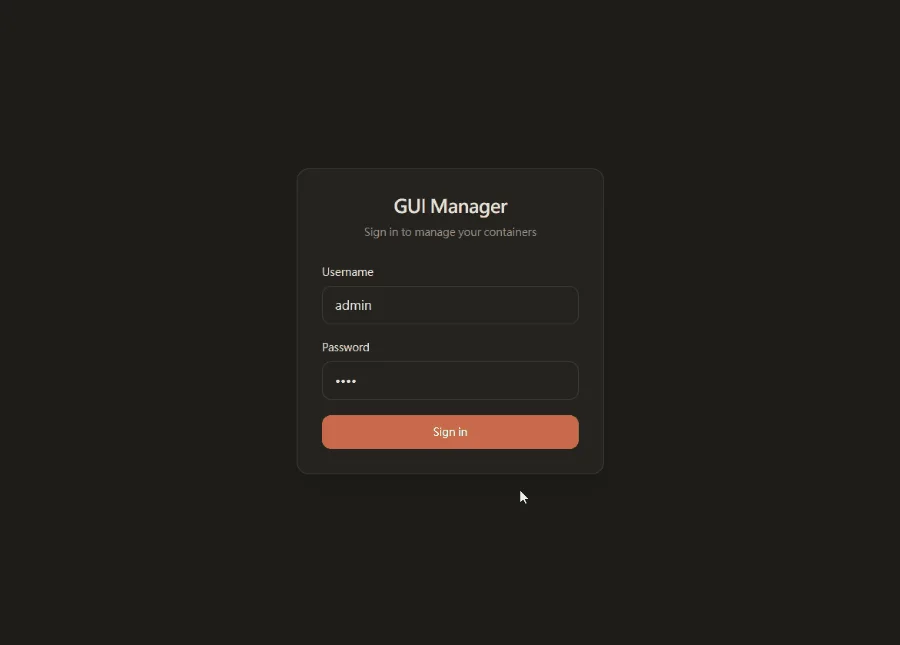
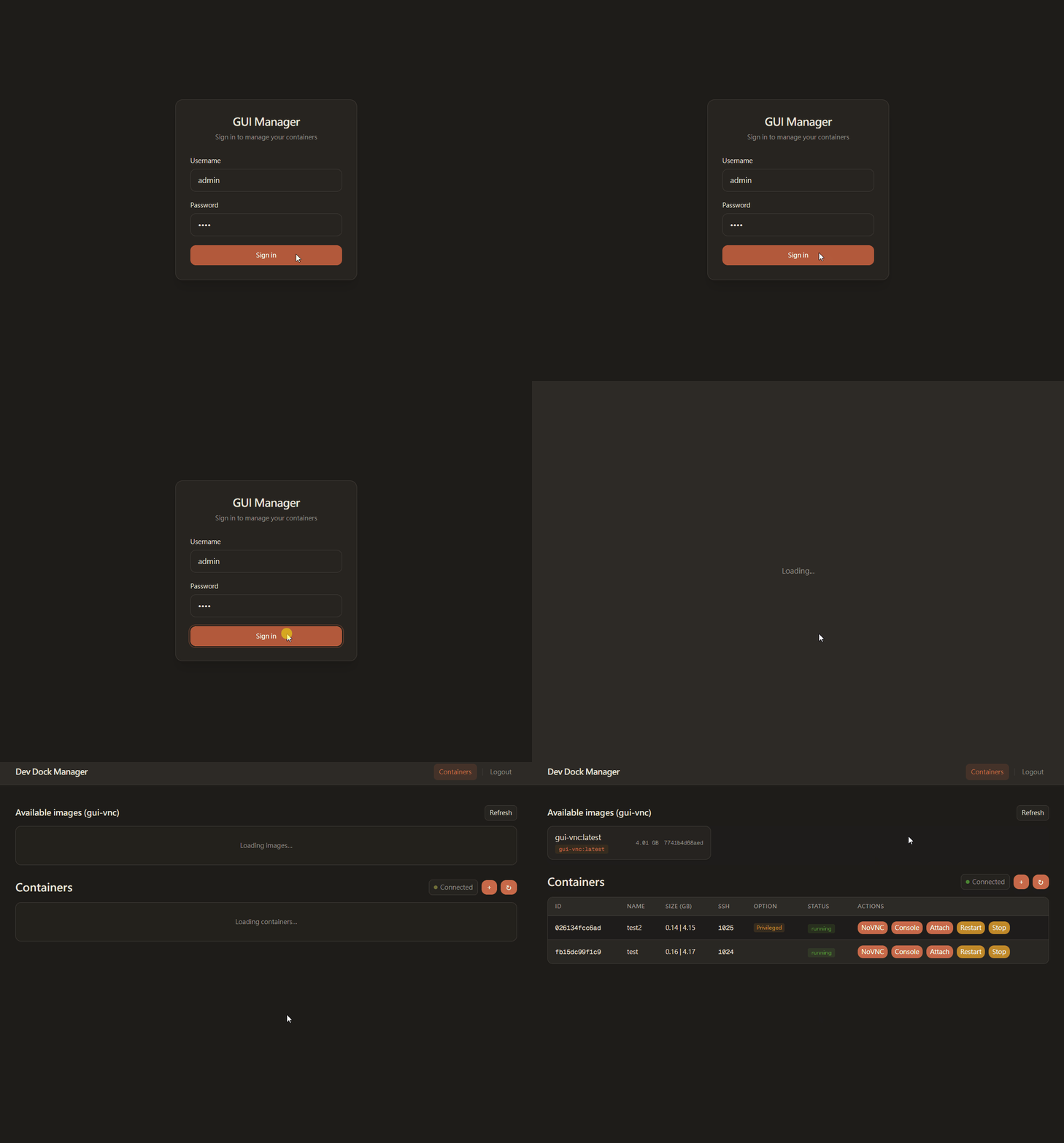
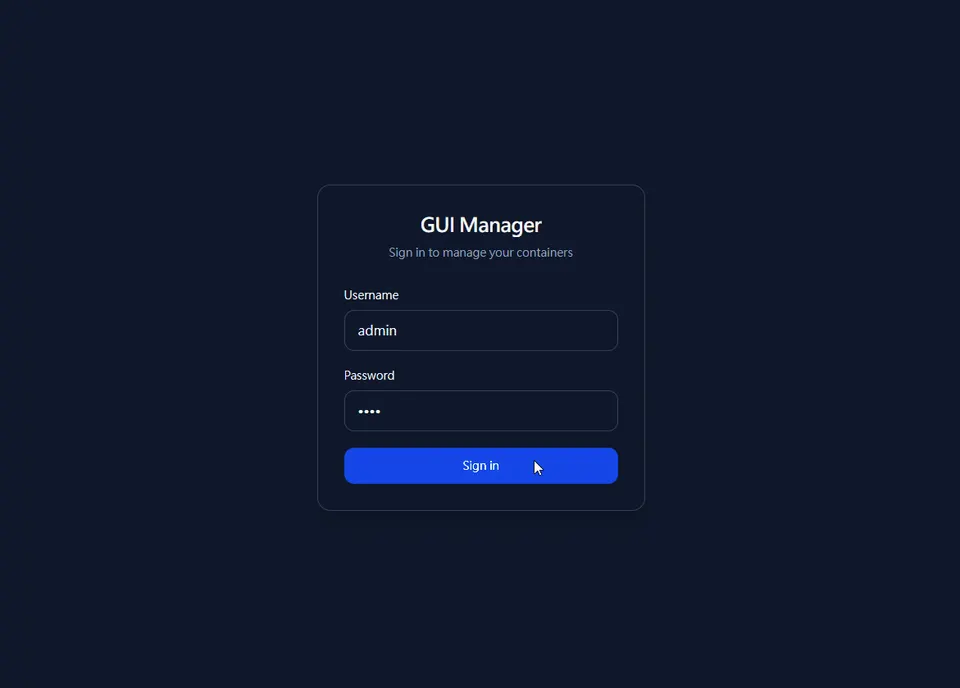
Signing in, then straight to your containers and the gui-vnc image.
What I learned
The rewrite answers most calls 4 to 6 times faster, but the two list calls mostly wait for Docker, so there the gap is only 1.2 to 1.6 times.
Log-in time is mostly password hashing (Argon2 here, PBKDF2 in Django), so not all of that speed-up belongs to the language.
/health lives on the API inside the Docker network. Traefik doesn't route it, so localhost:8000/health from the host gets the frontend's 404.
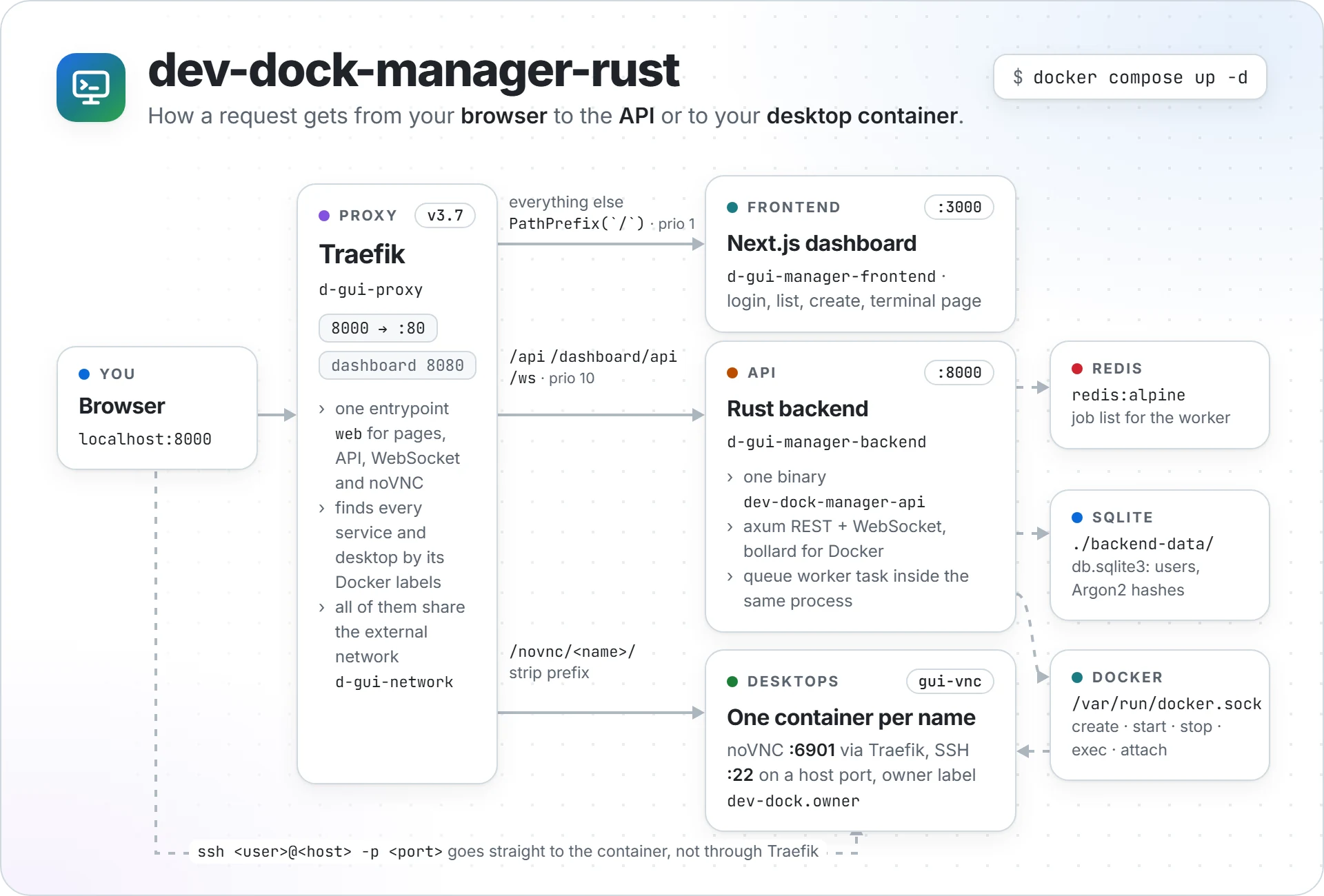
How it fits together
Simplified on purpose. The real thing has more arrows and at least one config file nobody understands.
Screenshots
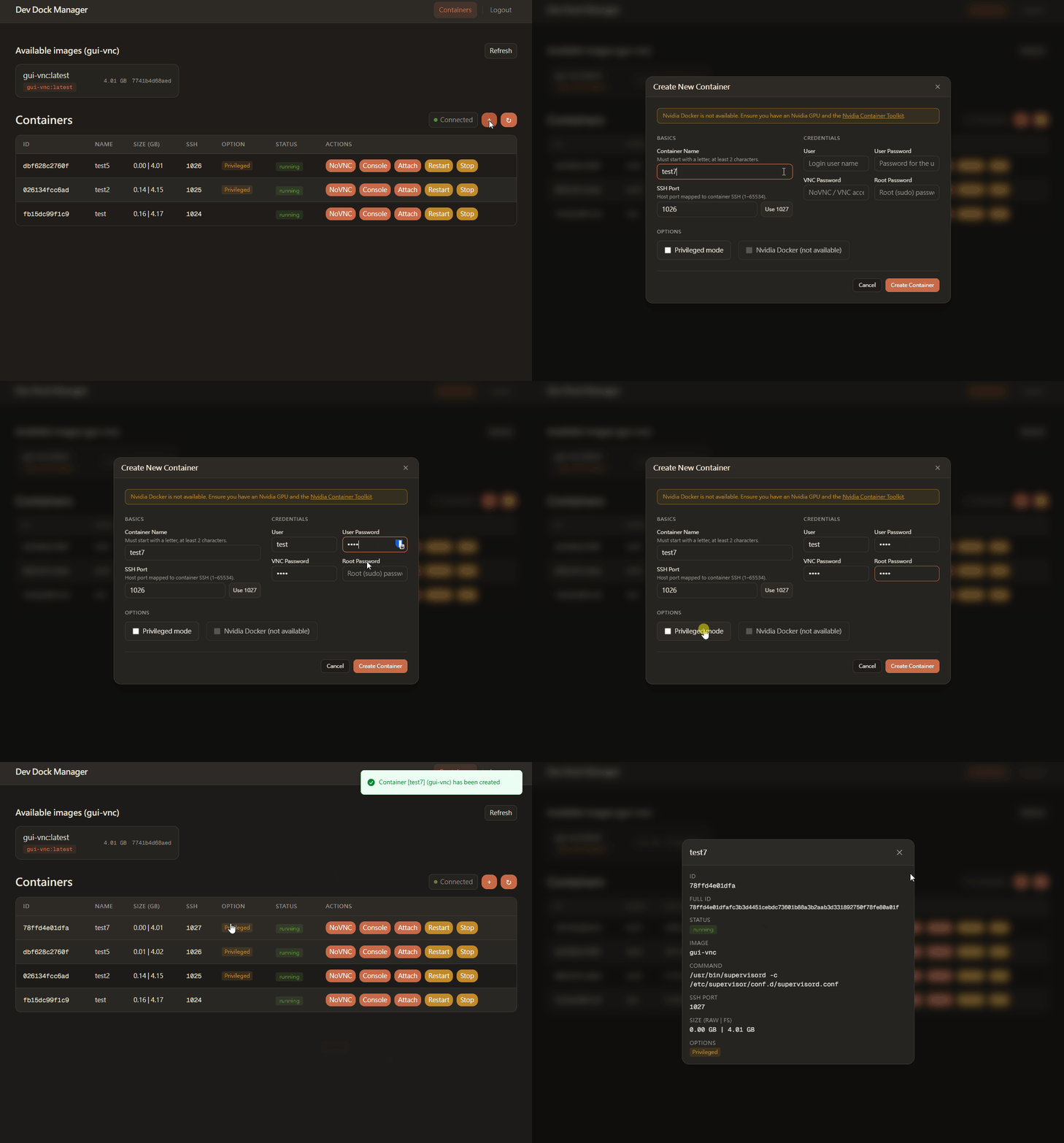
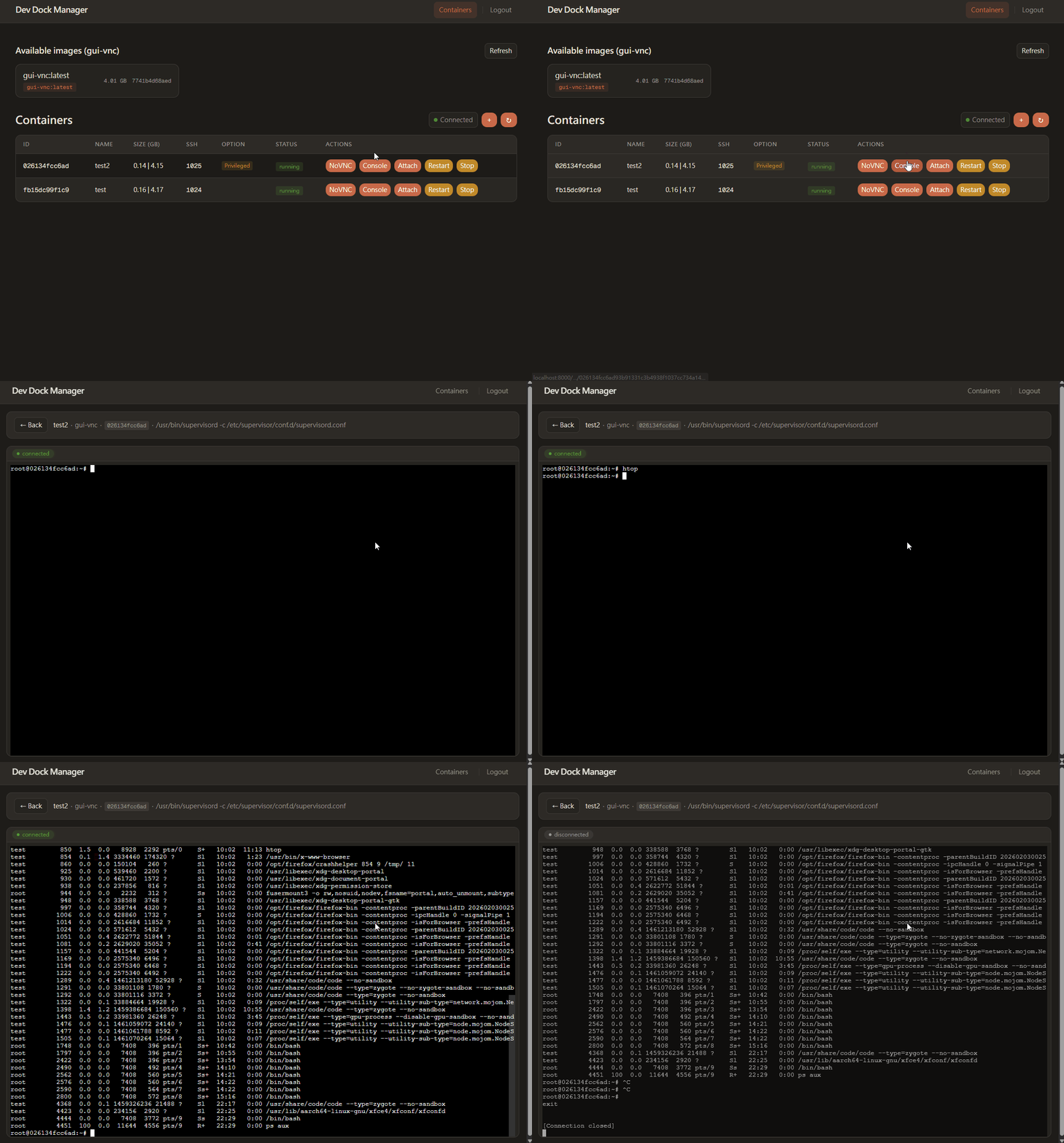
Creating a desktop as an admin, privileged mode ticked; it shows up in the list live.
Console opens a root shell in the desktop over a WebSocket; exit closes it.
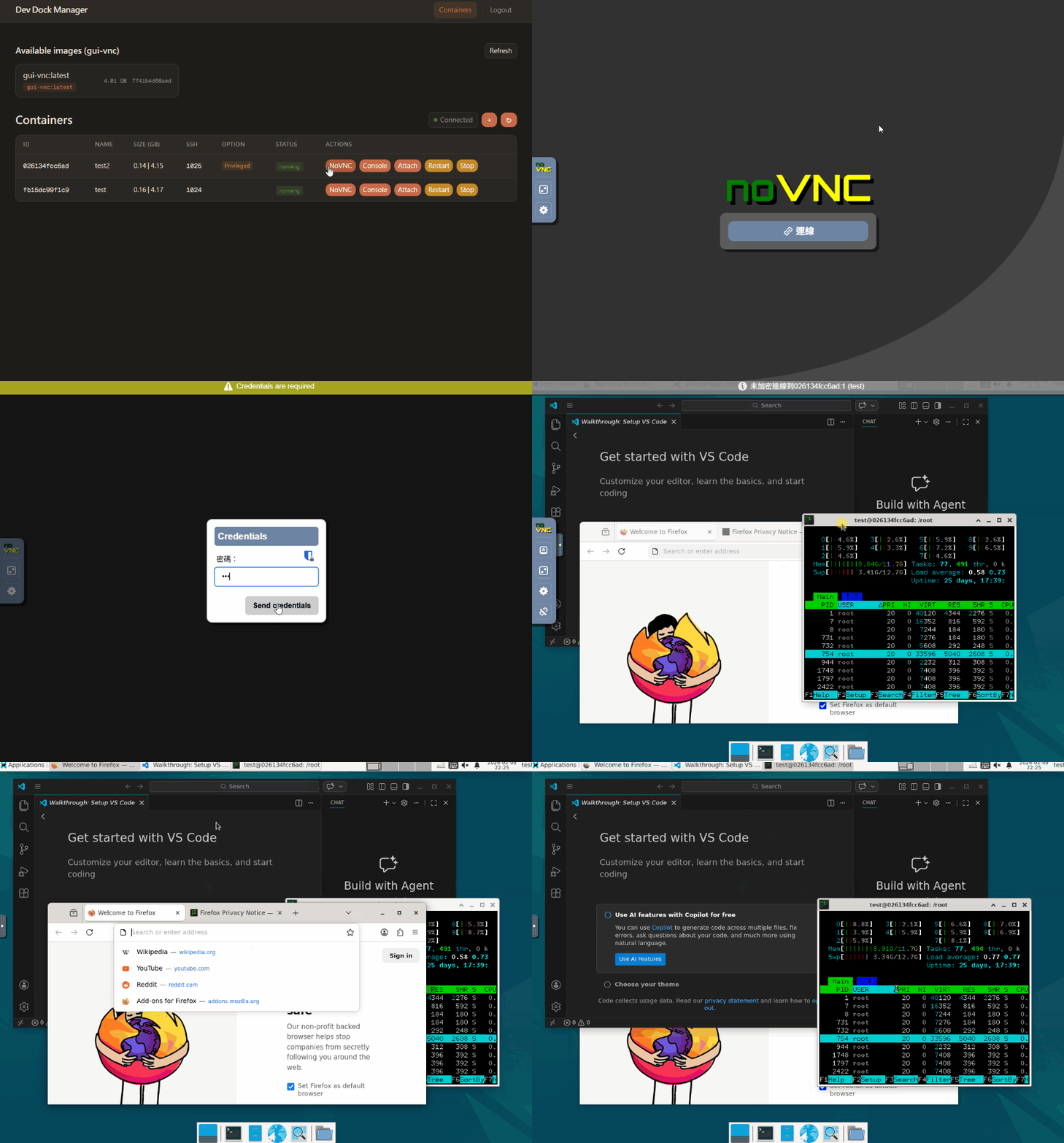
The NoVNC desktop: VNC password, then VS Code, Firefox and htop in the browser.
Same routes as the Django version, but the API is one Rust binary, queue worker included.
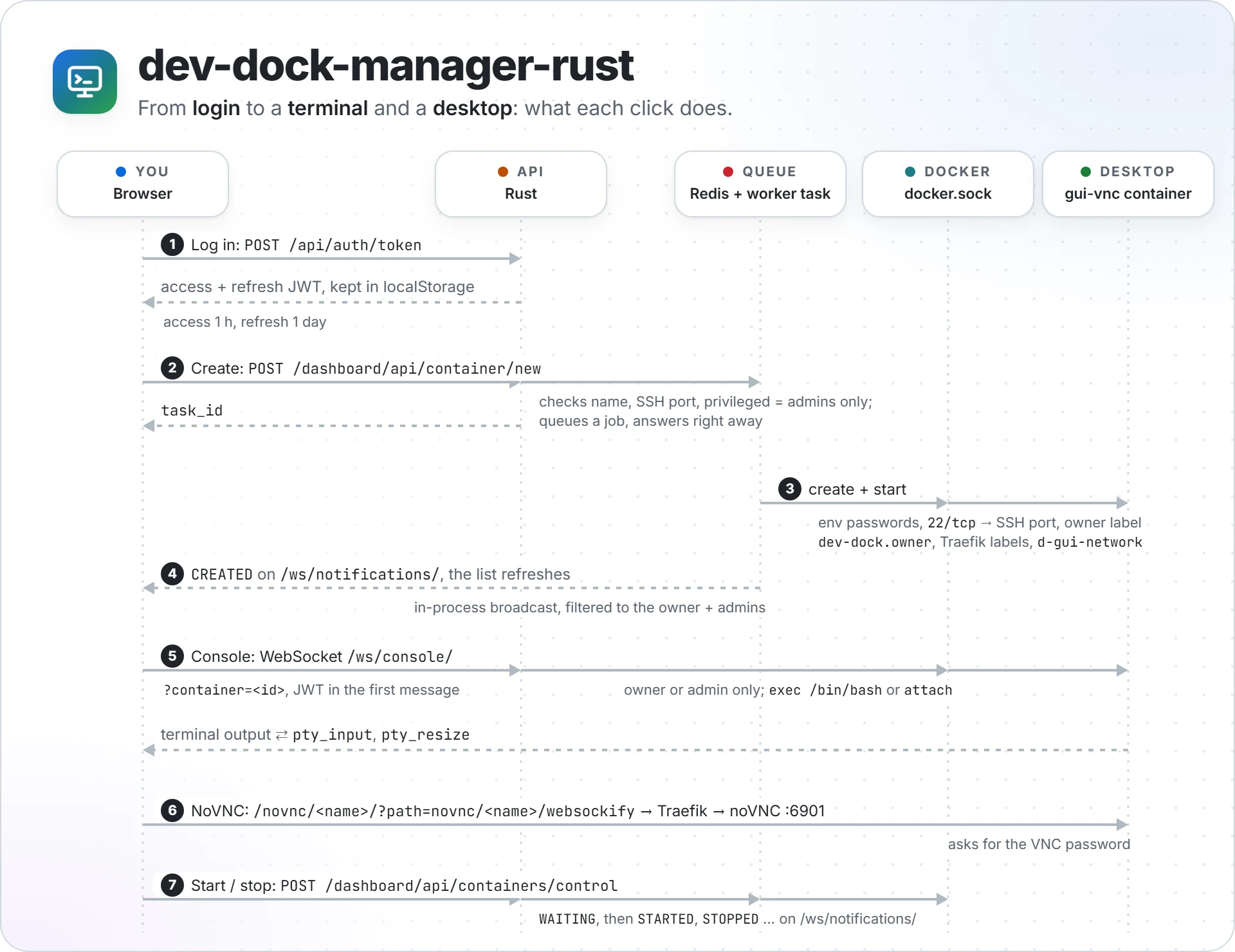
What each click does, from login to desktop. Access tokens last one hour here.
One outbound reverse SSH tunnel per device gives you a browser terminal, files, remote desktop, a remote browser and the LAN behind it. No port forwarding, no VPN, no public IP.
The original Django dev-box manager: isolated Docker environments for several users on one machine. The Rust version replaced it, but this one carried the load first.